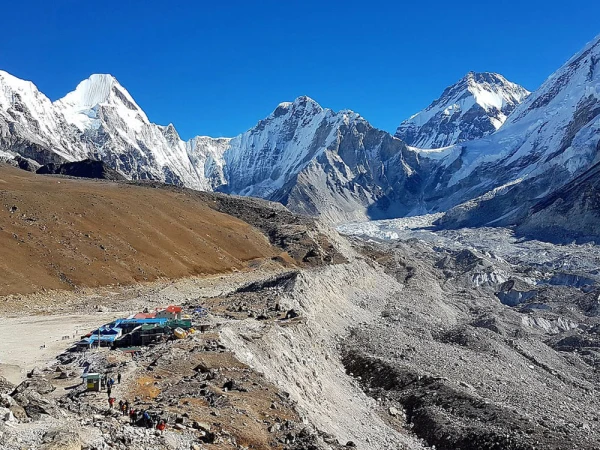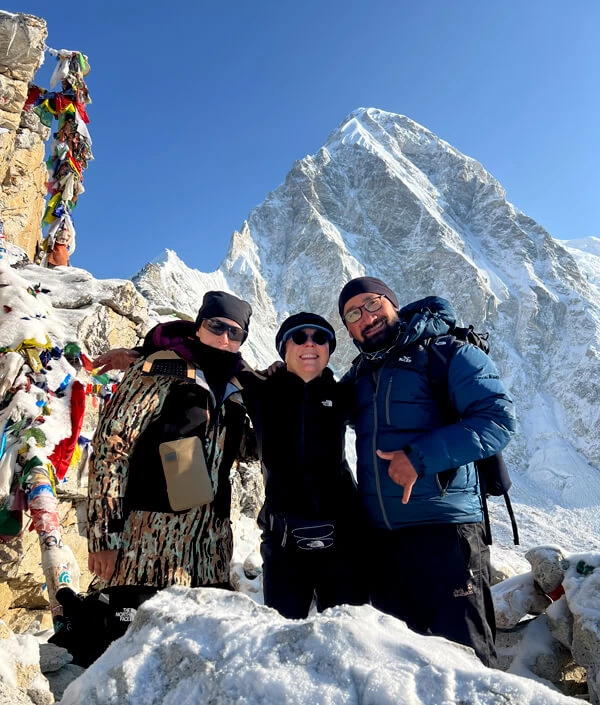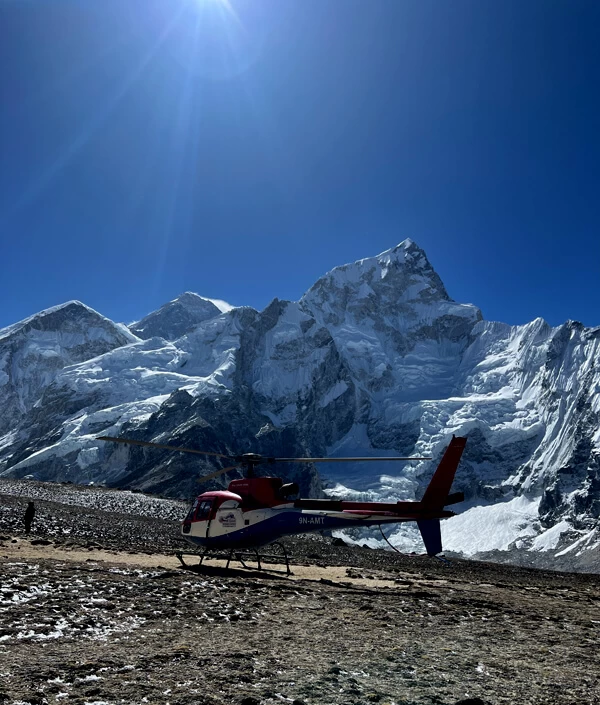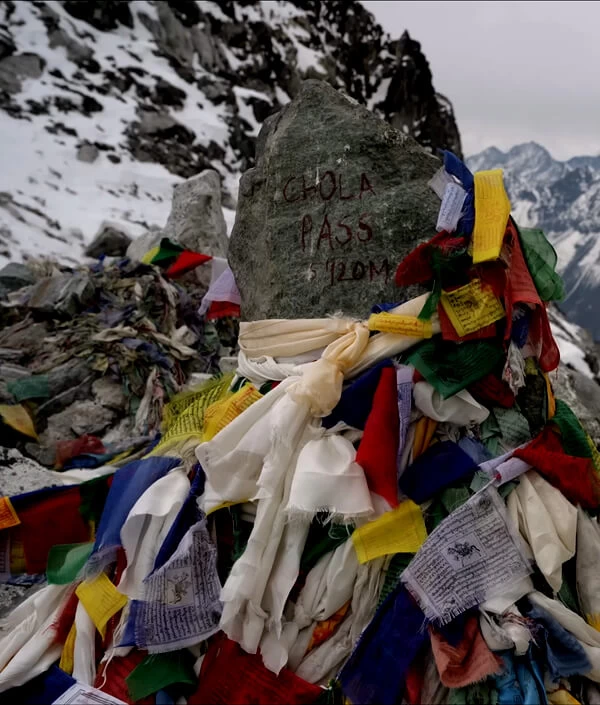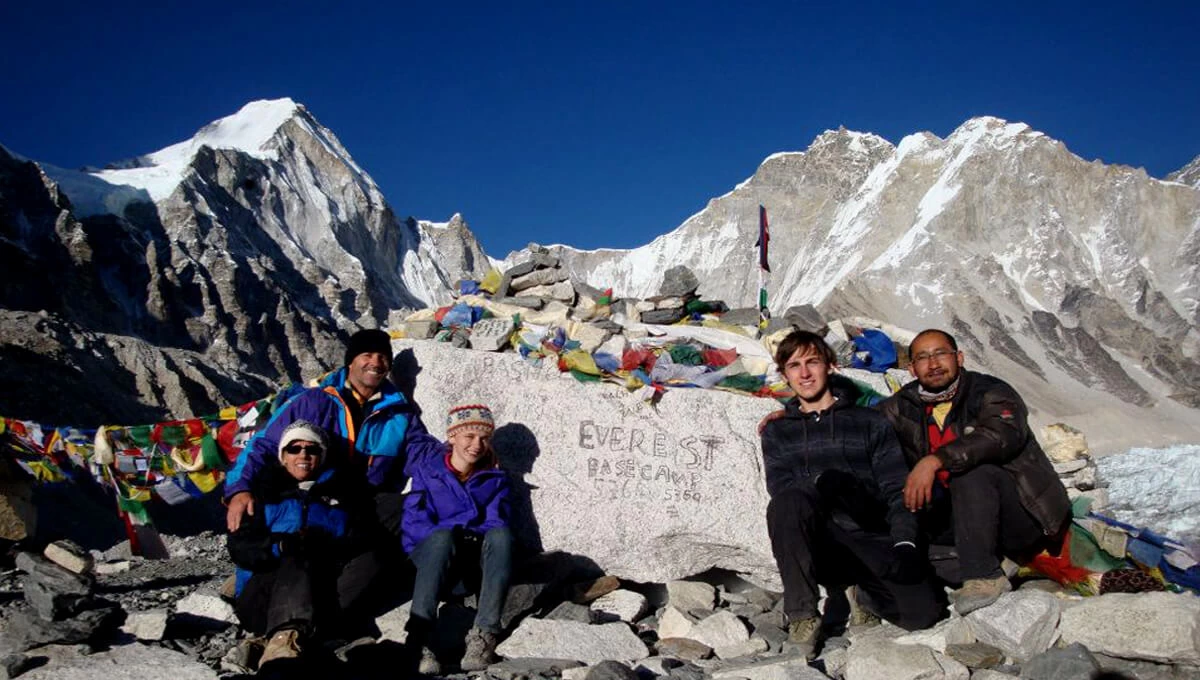
Colorful prayer flags at Everest Base Camp beneath Mount Everest in Nepal
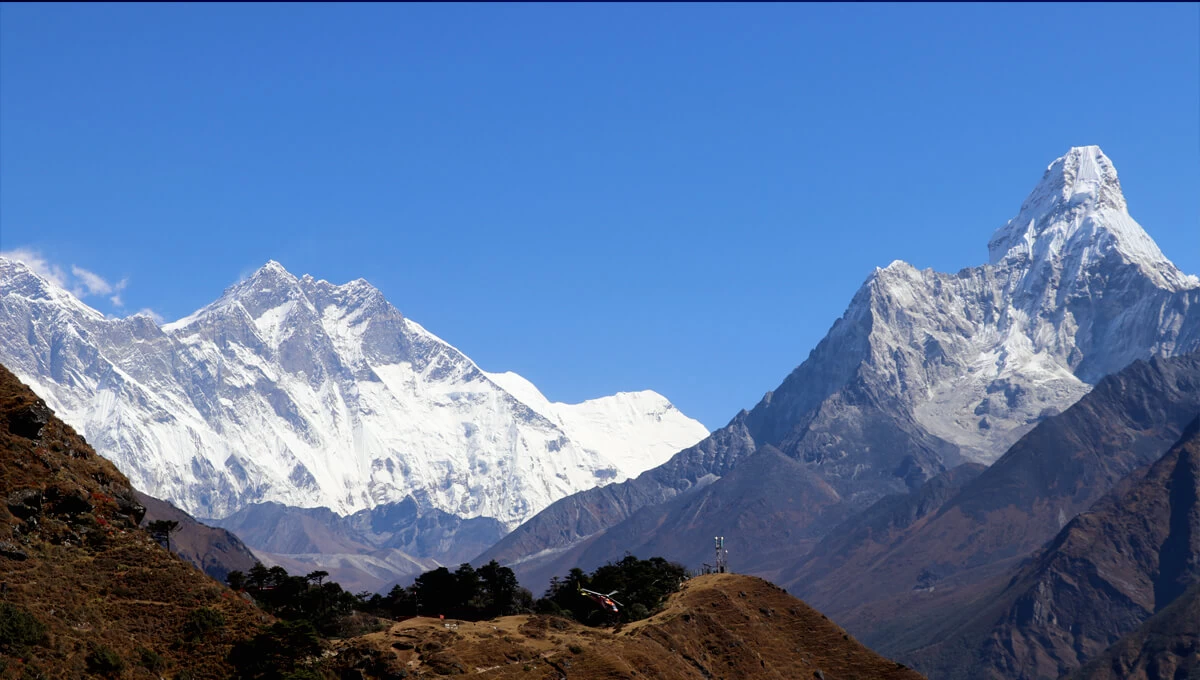
Everest View Hotel overlooking Mount Everest and surrounding Himalayan peaks
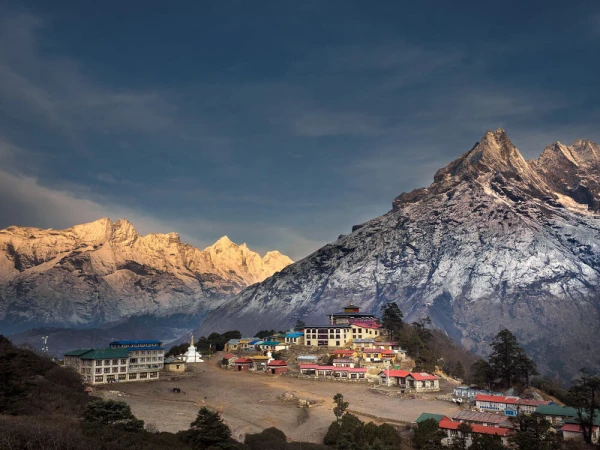
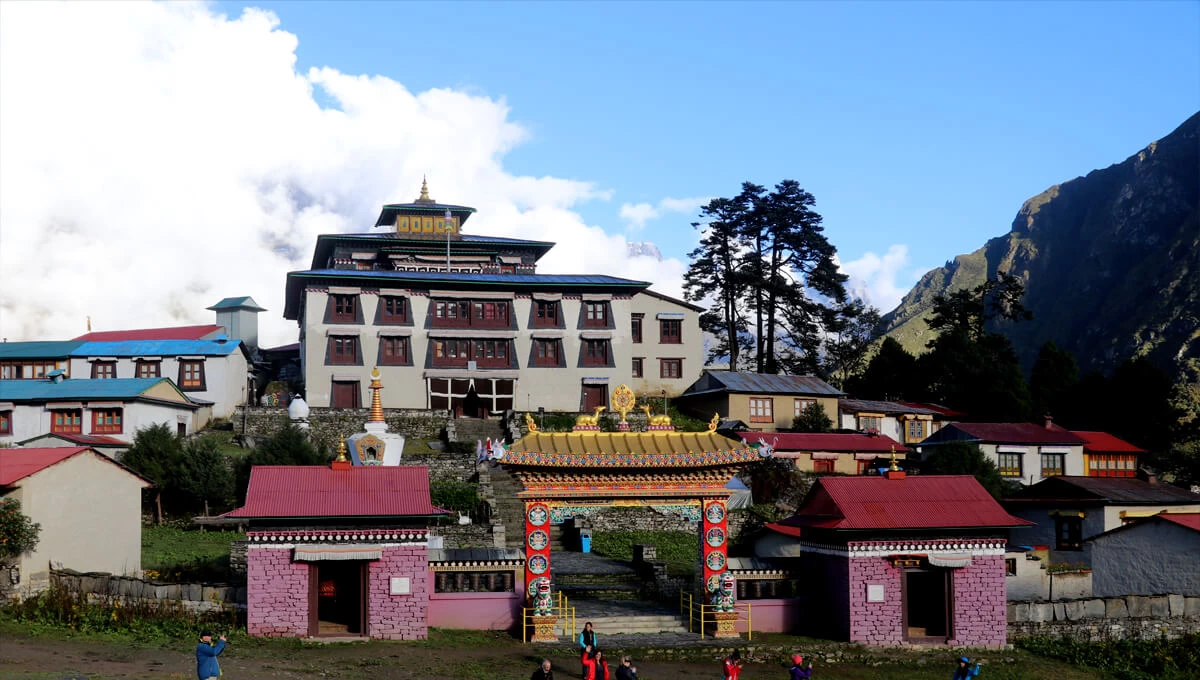
Tengboche Monastery

Everest Base Camp Trek - 14 Days

31 reviews in Trip Advisor
11 reviews in Google Reviews
Recommended by 99% of travelers

Everest Base Camp, in Nepal’s Solu-Khumbu District, is one of the toughest base camps to reach. This two-week trek offers stunning Himalayan views, including a panoramic vista of Mount Everest from Kala Patthar, all without needing mountaineering skills.

Duration
14 Days
Trip Grade
Moderate
Country
Nepal
Maximum Altitude
5,364 m (17,598 ft)
Group Size
1 to 15 People
Starts
Kathmandu
Ends
Kathmandu
Activities
Trekking & Hiking
Best Time
Spring & Autumn

Overview of Everest Base Camp Trek

Popular to be one of the most captivating Himalayan adventures in Nepal, the Everest Base Camp Trek lies in the heart of the Khumbu region. Being one of the most easily accessible treks with a short mountain flight to Lukla, the start of the journey gives access to beautiful forests, traditional mountain villages, and suspension bridges. Before even standing at the base of the world’s highest peak, each day on the trail gives new landscapes and jaw-dropping mountain vistas. 

Most of the travelers complete this Everest Base Camp Trek Package in 14 days. So, in total, we cover approximately 130 kilometers (round trip), with the highest point of the journey being Kala Patthar at 5,643 meters. This is one of the most famous viewpoints to get the closest and most mesmerizing panoramas of Mount Everest, especially during sunrise. 

This base camp journey is not just about looking at the dramatic peaks, but a chance to enjoy the warm Sherpa culture here. We get to cross through lively villages such as Namche Bazaar, Tengboche, Dingboche, and Lobuche. These places give an authentic experience of staying at the mountain teahouses. On the route, the ancient monasteries, colorful prayer flags, and local lifestyle give insights about the region and the traditions followed by the people here. 

Reaching the Everest Base Camp takes you through the Sagarmatha National Park, a UNESCO World Heritage Site that provides shelter to rare wildlife and plant species. Along with this, walking alongside the beautiful Dudh Koshi River and crossing over the bridges is what adds extra highlights to the journey. 

So, whether you are an experienced hiker or preparing for your first high-altitude adventure, this trek to Everest Base Camp is excellent for anyone with a basic fitness level. This offers a great moment to explore the Himalayas on foot. With proper acclimatization, experienced local guides, and a steady pace, this odyssey is easily achievable.

Important Highlights of Trekking Everest Base Camp for 14 Days 

  • Upon standing at the Everest Base Camp, experience the excitement of reaching the foot of the world’s highest mountain, as well as gain a personal achievement. 
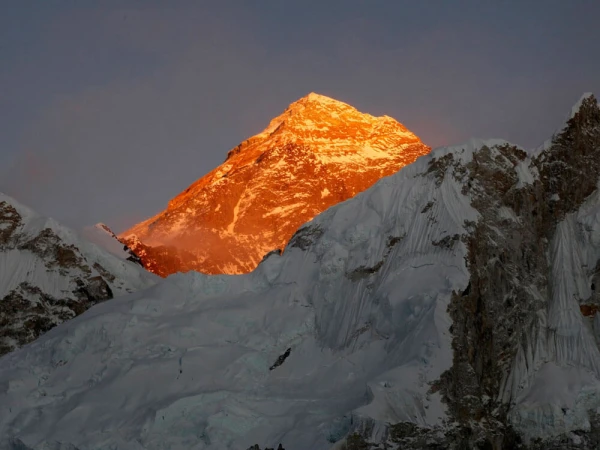
  • Take on a short hike to Kala Patthar (5,643 m), the highest point of the trek, giving the best panoramic sunrise and sunset views over Mount Everest, Nuptse, Pumori, Lhotse, and other surrounding peaks. 
  • Walk through the Sagarmatha National Park, known for its glaciers, alpine forests, unique mountain wildlife, and valleys that offer amazing experiences. 
  • Spend time at the Tengboche Monastery, as it gives chances to have proper interaction with the local monks and witness the stunning vistas. 
  • Fully enjoy your time in the vibrant mountain town of Namche Bazaar, as the local Sherpa communities and markets offer moments. 
  • Cross over the stunning Dudh Koshi River, as we pass through the beautiful suspension bridge, providing a peaceful sound of the flowing river below. 
  • Get a chance to celebrate the achievement, as one of the bucket-list adventures for many trekkers around the world has finally been completed. 
  • Pass via glaciers, moraines, and the incredible Khumbu Icefall that offers a great chance to witness the authentic beauty. 

Everest Base Camp Trek Itinerary and Route Overview

The Everest Base Camp Trek Itinerary is one of the most-traveled classic routes in the Khumbu region. With a perfect balance of diverse landscapes, rich Sherpa culture, and astonishing Himalayan scenery, this mountain adventure is what really amazes trekkers. With a mix of well-marked trails, proper acclimatization days in your itinerary, and the opportunity to reach the stunning viewpoints, it is what truly makes the Everest Base Camp Trek 14 Days feel great from the start. 

The journey begins with an early morning flight to Lukla, followed by a short trek to Phakding on the same day. The initial section of the route involves passing over the Dudh Koshi River, which gives a great experience from the very start. On the next day, the trek reaches Namche Bazaar, the bustling Sherpa town of the Khumbu region and the major point to rest and adjust to the higher altitude. This is a great opportunity to enjoy the warm Sherpa hospitality, visit local markets, and take a short hike to Everest View Hotel. 

After a great extra day in Namche, the journey now proceeds towards Tengboche, a great and popular place for its spiritual Tengboche Monastery. From here, we then reach stunning mountain settlements such as Dingboche, Lobuche, and Gorakshep. This is the exact point from where we take a moment to reach the Everest Base Camp and return again.

On the very next day, we take a mind-blowing hike to Kala Patthar, as this point is great to catch the breathtaking vistas of Mount Everest from close. The Everest Base Camp journey finally ends, and we will be returning the same way from Pheriche, Namche Bazaar, Lukla, and then finally to Kathmandu. 
Everest Base Camp Trek Difficulty and Required Fitness Level

The Everest Base Camp Difficulty is considered a moderate to challenging one, mainly due to its high altitude. As doing this trip does not require prior experience or technical climbing skills, trekkers must be able to handle walking for approx 5 to 7 hours each day. Throughout the journey, we get to see that the trails are well-maintained from Lukla. This is what makes the walk feel fully rewarding, passing through forests, rocky paths, suspension bridges, and steep ascents that are easily manageable. 

But be extra careful, as some sections of the route can be demanding at times, mainly during the higher-altitude approach. Even without any mountaineering skills or previous climbing experience, this trek can be done by first-time trekkers who gain a good level of fitness. 

So, for beginners, we even recommend preparing in advance, especially with regular hikes, cardio exercises, and focusing more on leg-strength training. With a proper acclimatization plan and listening to what your guide says is where it really makes the difference. Therefore, do what your guide says and always have proper coordination with them. 

Is this Everest Base Camp Trek Right for You?

The Everest Base Camp Trek is a great choice for anyone who enjoys nature, mountain landscapes, and the idea of exploring the Himalayas on foot. For doing this trek, you don’t need previous mountaineering experience to complete, but it is necessary to have a reasonable level of fitness and preparation before the trip. By following a well-planned Everest itinerary, proper adjustment days, and gradual acclimatization, this can be easily done even by you or any other first-time trekker.

Whether this is your first mountain experience, solo travelers, couples, families, or someone with children, this adventure has something special for everyone. The Everest Base Camp Trek is not just about reaching the base of the world’s highest peak, but a journey that gives an incredible encounter with Sherpa culture, warm mountain hospitality, and a chance to visit the ancient monasteries here. 

Everest Base Camp Trek Cost for 2026 and 2027

The Everest Base Camp Trek Cost starts from US$1,499 per person, offering excellent value for money for a Himalayan adventure in Nepal. This EBC Trek Package covers everything from experienced local Sherpa guides, comfortable teahouse accommodation, three meals a day, trekking permits, and flight to Lukla tickets. 

For those in larger groups, they get more discounted pricing, as it helps the trek feel much more affordable. It gives a great chance to enjoy quality time in the Everest region with their families, friends, and trek in an organized group. 

Group Size Price Per Person
1 Pax US$1,499
2 - 4 pax US$1,449
5 - 10 pax US$1,399
11 - 15 pax US$1,349
16 - 20 pax US$1,299

While the package covers most of your essential services, trekkers should budget for their personal expenses such as travel insurance, Nepal visa fees, snacks, hot showers, WiFi, and charging devices, 

The tips for the guide and porters, as well as other additional accommodation costs caused by weather delays in the Lukla flights. Therefore, with a proper understanding of the inclusions and exclusions before booking helps you plan a budget-friendly and smooth trek in the Everest region. 

What Accommodations and Food Options Can You Expect on EBC Route?

Throughout the Everest Base Camp Trek, we stay in comfortable local teahouses that offer a warm and welcoming place to rest. So, most of the rooms here are usually on a twin-sharing basis with clean beds, shared bathrooms at higher altitudes, and dining halls, where trekkers gather to have their dinner. But the moment you get to higher elevations, the facilities become simple, but the genuine Sherpa hospitality remains the same. 

Meals are freshly prepared and provide the energy needed for daily trekking. We even get to enjoy a variety of dishes, including dal bhat, noodles, fried rice, pasta, soups, potatoes, eggs, and seasonal vegetables. So many teahouses even serve tea, coffee, bakery items, and simple desserts, which makes the meal at the Himalayan even more authentic and delicious.

Transportation Options for Trekking Everest Base Camp

Reaching the Everest region itself feels a bit tough for first-time trekkers. So, to make it even easier and safer, there are several transportation options, but it depends on your itinerary, budget, and travel preferences. But from our side, we do offer the Lukla flight, while there are even travelers who prefer a helicopter or longer overland route to avoid flight delays. 

Flight from Kathmandu to Lukla 

During the off-season, you can easily catch the direct flights from Kathmandu to Lukla. This is just a 30- 35-minute flight that amazes you with the spectacular views of the Himalayas and is the quickest way to reach the gateway to Everest. 

Flight from Ramechhap to Lukla 

During the busy spring and autumn time, which is also the peak trekking season in Nepal, many Lukla flights are operated from Ramechhap Airport instead of Kathmandu. So, to reach Ramechhap, we arrange the required road transfer from Kathmandu, followed by the thrilling mountain flight to Lukla. 

Kathmandu to Lukla Helicopter Flight 

For trekkers who are looking for greater flexibility or wishing to avoid the potential flight delays, a shared or private helicopter flight to Lukla can also be a great option. This treats you to the incredible aerial views of the green hills as well as the stunning snow-capped mountains from a distance. This is also the best way to experience comfortable travel, although it can cost a higher cost and is not included in the package. 

Road Journey to Salleri or Thamdanda

For those who enjoy a longer adventure or want to avoid flying, it is even possible to take a drive from Kathmandu to Salleri or Thamdanda and start to trek from there. This option adds extra trekking days but provides a unique opportunity to experience more of the rural places in Nepal before even entering the Everest region. 

Why Choose Our Team for Your Everest Base Camp Trek?

Before you even think of doing the Everest Base Camp Trek, it is a wise decision to choose a reputable and experienced trekking agency. We, the team of High Camp Adventure, have gained years of expertise and knowledge, as we have already assisted thousands of trekkers through the routes of the Himalayas, mainly Everest. So, you don’t need to worry about the support and guidance during the trek.

  • Plan the EBC trek with our knowledgeable professionals, as we have gained years of expertise in managing larger groups in the Everest region. 
  • We include proper government-licensed guides who are well-trained to handle first aid, altitude safety, and how to respond during emergencies.
  • At HCA, there are no hidden charges, as we fully explain our package details, cost, and what it includes and excludes.  
  • Whether you plan to do this trek solo or in a group, we ensure equal importance and do offer personalized services to our trekkers. 
  • Get some insights about the Sherpa culture and see the amazing beauty of the Himalayas, as they are shared by your local guides. 
  • We promise to provide memorable trekking experiences, as honesty and proper attention to every detail is what makes the journey feel more enjoyable.

Everest Base Camp Trek - 14 Days Itinerary

Start Point: Kathmandu
End Point: Kathmandu
Expand All

On the very first day of your arrival, our team representative will be there at the Tribhuvan International Airport. After a warm greeting and welcome, you will be transferred to your designated hotel inside the city, giving you easier access to all the major places. The moment you check in, you get enough time to relax and recover from the journey and walk around the streets nearby. In the evening, we will be meeting for a short trek briefing, going through the final preparation, and clearing your doubts. 

Max Altitude: 1400 m (4,593 ft)Meals: BreakfastAccommodation: Hotel

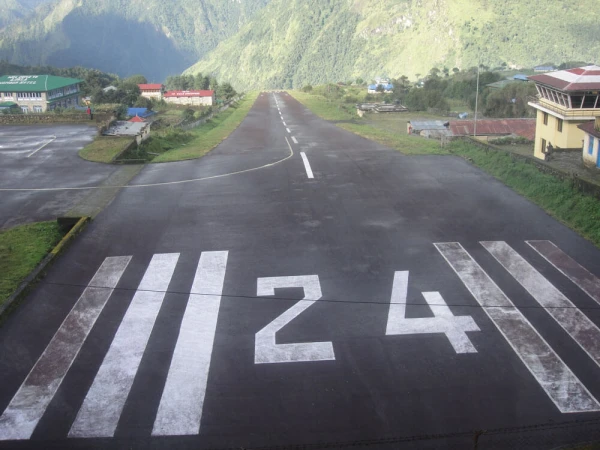
On day 02, we first take an early morning flight from Kathmandu or Ramechhap and move towards Lukla, depending on your flight schedule. Today’s journey is a short mountain flight that rewards you with the astonishing vistas of the snow-capped Himalayas and green hills. After 30-35 minutes of flight, we reach the famous Tenzing Hillary Airport, where our Sherpa guide will be waiting to welcome you. 

The trail moves through traditional Sherpa villages and crosses beautiful suspension bridges that span the Dudh Koshi River. It involves a mix of gradual ascents and descents, with chances to see prayer wheels, mani walls, and small villages on the way. The moment you arrive in Phakding, a great place to enjoy a warm meal and spend a comfortable overnight stay.

Max Altitude: 2,610 m (8,562 ft)Meals: Breakfast, lunch, dinnerAccommodation: Tea House

Today, we continue further towards the bustling Sherpa town of the Khumbu region. We continue our journey alongside the Dudh Koshi River, giving a great chance to cross the beautiful suspension bridges. This is the day we finally enter the Sagarmatha National Park at Monjo, and from here the trail starts to become steeper. If we are lucky enough, we even get to catch our first distant view of Mount Everest. 

After a short ascent, we finally arrive at Namche Bazaar, the vibrant mountain town filled with cozy cafes, local bakeries, and an opportunity to enjoy the warm Sherpa hospitality. This is one of the crucial points to rest, acclimatize, prepare your body, and get insights about the local Sherpa culture and traditions. 

Max Altitude: 3,440 m (11,286 ft)Meals: Breakfast, lunch, dinnerAccommodation: Tea house

On day 04, we have an extra day for acclimatization, as it makes the coming days of the journey feel safe and rewarding. This is great to allow the body enough time for adjustment to higher sections, as the coming days might feel easier to ascend. We will be taking a short hike to nearby viewpoints, as stunning panoramas of Mount Everest, Ama Dablam, Lhotse, and other snow-capped peaks make it worth it. 

In the same way, as we descend back to Namche Bazaar, we get to spend extra time exploring the village, visiting local cafes, and learning more about the Sherpa culture and tradition.

Meals: Breakfast, lunch, dinnerAccommodation: Tea house

On day 05, we will be leaving from Namche and follow the scenic trail that rewards us with breathtaking views of snow-capped peaks. As we descend to the Dudh Koshi River, we cross the suspension bridge before making a steady uphill climb through the blooming rhododendron and pine forests. Today’s hike is short, as it allows us to enjoy the changing landscapes and mountain scenery. 

By afternoon, we reach Tengboche, a place that serves as the largest and most important monastery in the Khumbu region. We get to visit the Tengboche Monastery, rewarding a great chance to experience Buddhist traditions.

Max Altitude: 3,867 m (12,687 ft)Meals: Breakfast, lunch, dinnerAccommodation: Tea house

We begin the day by descending through the peaceful forests before even crossing the Imja Khola River. The journey first involves climbing through the beautiful village of Pangboche. So, as you pass by, the landscapes keep on changing, with fewer trees and wider mountain valleys starting to open up. 

As we continue passing through the trail, we get to encounter traditional stone villages and yak pastures. Reaching Dingboche, the most scenic settlement in the Khumbu region, is surrounded by dramatic peaks and open alpine terrain. This place gives you a quieter atmosphere and serves as an important stop for acclimatization as well.

Max Altitude: 4,410 m (14,469 ft)Meals: Breakfast, lunch, dinnerAccommodation: Tea house

Today is another important acclimatization day, but be sure not to spend the time just relaxing at the teahouses. In the morning, we take a hike to Nangkartshang Peak, one of the best viewpoint spots above Dingboche. The climb is challenging due to the thin air, but each step rewards us with even wider views of Ama Dablam, Makalu, Lhotse, and other surrounding landscapes. 

After some time, you return to Dingboche for a relaxing afternoon.  Today’s climb is great to help your body adjust to the altitude while giving us extra confidence to take on more higher sections of the trek. 

Meals: Breakfast, lunch, dinnerAccommodation: Tea house

On day 08, we will be leaving from Dingboche and pass through an uphill climb that gives wide alpine valleys. As we gain elevation, the landscapes start to get even more dramatic, as we pass through the memorial site at Thukla, where stone monuments honor climbers and trekkers who lost their lives on Everest. 

From here, the trail takes us through the edge of the Khumbu Glacier before reaching the small settlement of Lobuche. As we stand here, we get a feeling of ourselves being surrounded by rugged mountains and glacial landscapes.

Max Altitude: 4,930 m (16,175 ft)Meals: breakfast, lunch, dinnerAccommodation: Tea house

This day is one of the most rewarding days of your entire journey, as we finally make our way towards the Everest Base Camp. Today’s day starts early in the morning, as we move from Lobuche first, passing through glacial terrain and reaching Gorakshep. This is the final settlement area before reaching the base camp.  After a short break in Gorakshep, we leave our main bags at the teahouse and continue along the rugged trail that is beside the Khumbu Glacier. 

We finally reach the Everest Base Camp, which provides a sense of achievement, as we stand at the base of the world's highest peak. From here, we get to see colorful expedition tents, mainly during the peak climbing seasons, as well as the incredible Khumbu Icefall. So, after enjoying your time here in the base camp, we take photos, soak in the beauty of this region, and return to Gorakshep for the night.

Max Altitude: 5,364 m (17,598 ft)Meals: Breakfast, lunch, and dinnerAccommodation: Tea house

Today’s day starts with an early morning hike towards Kala Patthar, making it the highest point of the entire journey. The trail takes us through gradual ascents and uneven sections that can be tough and equally challenging, mainly due to higher altitude and cold morning air. But the moment we see the captivating sunrise over the snow-capped peaks of Everest, Nuptse, Lhotse, and other mountains makes the stay feel equally mesmerizing. 

After enjoying the spectacular vistas, we begin our descent back to Gorakshep for breakfast before starting our trek towards Pheriche. The downhill section is equally breathtaking, as the mountain landscapes feel more enjoyable than we ever imagined. 

Max Altitude: 5,555 m (18,225 ft)Meals: Breakfast, lunch, dinnerAccommodation: Tea house

After breakfast, we again started our journey towards Namche Bazaar from Pheriche. The route feels much more familiar, as we pass through Pangboche and Tengboche that give way to the peaceful forest trails. The moment we lose altitude, the air again starts to feel fresh, which makes walking even more relaxed with chances to witness the landscape in a more amazing way. 

As we near Namche, we need to cross through beautiful suspension bridges and via traditional Sherpa villages. Upon reaching here, we get a great atmosphere, as we feel ourselves being surrounded by the stunning vistas, and a chance to enjoy a warm meal. 

Max Altitude: 3,400 m (11,154 ft)Meals: Breakfast, lunch, dinnerAccommodation: Tea house

Our final day on the trail takes us from Namche Bazaar back to Lukla, following the familiar routes through Sherpa villages. Along the way, we even need to navigate across suspension bridges that cross the Dudh Koshi River. Although most of the sections of the route involve downhill, there are a few gentle climbs along the way that make the walk feel engaging and enjoyable. 

The moment you reach Lukla, we get to celebrate completing the Everest Base Camp Trek together. In the evening, we enjoy our last night in the mountains, sharing stories with our guides, porters, and fellow trekkers.

Max Altitude: 2,864 m (9,396 ft)Meals: Breakfast, lunch, dinnerAccommodation: Tea house

On day 13, we take a return flight from Lukla and head towards Kathmandu / Ramechhap, depending on the season. The journey is equally important, as it takes you over the magnificent Himalayas and surrounding hills that create memorable experiences. So, the moment you land in Kathmandu, our team representative will transfer at the hotel, offering a great chance to rest and unwind from your journey. 

The rest of the day is empty for you, as we spend the time exploring the bustling markets of Kathmandu. Here, we get to buy local souvenirs, and in the evening, we celebrate the completion of the Everest trek.

Max Altitude: 1,400 m (4,593 ft)Meals: BreakfastAccommodation: Hotel

On day 14, your Everest Base Camp adventure comes to an end, as you will be transferred to Tribhuvan International Airport by our team representative. But we make sure you reach the airport 3 hours before your final departure, ensuring that you don’t miss your flight.

Let us help You Plan Your Perfect Holiday
Looking for a customized trip? Let us know your estimated holiday time, budget, travel style, etc. We will design an amazing personalized itinerary for you.

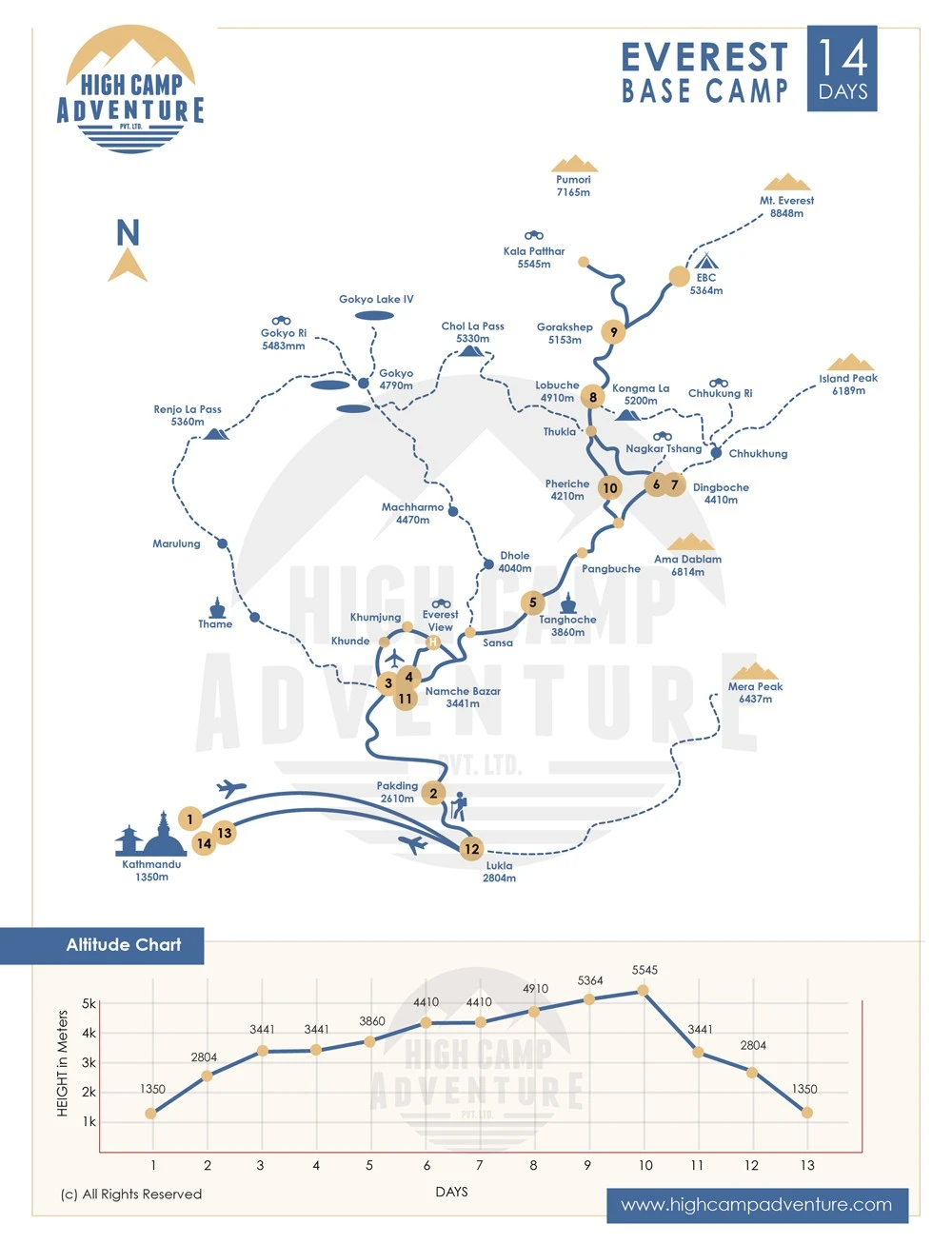
Route Map

Everest Base Camp Trek Map

Cost Details

Includes

  • Accommodation at a 3-star hotel during your stay in Kathmandu for 2 nights, even includes breakfast. 
  • Twin-sharing comfortable mountain teahouse accommodation for your Gokyo Lake Trek with attached bathrooms in Phakding and Namche Bazaar. 
  • Delicious and fulfilling three meals a day (breakfast, lunch, and dinner) with tea and coffee options. 
  • Fresh fruits each day after dining during the trek. 
  • Purified drinking water during the trek, but highly suggested to carry your own purification tablets. 
  • Farewell Dinner on the day of your arrival in Kathmandu from Lukla. 
  • Airport transfers for your international as well as domestic flight on a private car or bus, depending on your group size. 
  • Flight ticket from (Kathmandu / Ramechhap - Lukla - Kathmandu / Ramechhap)
  • During peak seasons, most of the Lukla flights are done from Ramechhap, so we arrange a drive from Kathmandu - Ramechhap on a shared tourist bus. 
  • Government-licensed, experienced, and English-speaking local Sherpa guide that belong to the Everest region and has gained years of expertise on the mountain trails.
  • Local porter to carry all your heavy luggage and items during the trek. (1 porter for every 2 trekkers). 
  • Our company covers all wages, accommodation, meals, gear, insurance, and medications for all the guides and porters. 
  • Sagarmatha National Park Area Permit Fees. 
  • Khumbu Pasang Lhamu Rural Municipality Permit Fees. 
  • 1 High Camp Adventure’s Duffel Bag (must be returned after the trek). 
  • Everest region Trek Map. 
  • Trekking poles that can be easily adjusted. 
  • Sleeping bag.
  • Down jacket 
  • Basic first-aid kit with necessary medicines
  • Trip Completion Certificate
  • All administrative expenses and government taxes. 

Excludes

  • Major meals during your stay in Kathmandu. 
  • International flight ticket to and from Nepal.
  • Nepal Entry Visa (possible to secure an on-arrival visa at the Tribhuvan International Airport in Kathmandu, with a fee of USD 30 for 15 days, USD 50 for 30 days, and USD 125 for 90 days). 
  • Tips for trekking guide and porters. 
  • Personal trekking gear and equipment that are required for the Everest trek. 
  • Any beverage, including bottled, boiled water, or alcohol. 
  • Expenses other than the price inclusion section. 
  • Travel insurance that includes high-altitude emergency helicopter evacuation.

Add-ons & Options

We are offering the following add-on features:

Immerse yourself in the breathtaking landscapes while our expert porters manage your gear. Each porter, with a capacity to carry up to 25 kg, can assist two travelers, allowing you to fully enjoy the awe-inspiring beauty of the Everest region. Please choose this option for the personal/additional porter.

Dates & Availability

These are upcoming fixed departure dates. If you are looking for a different date, feel free to contact us.

Essential Information

Itinerary Disclaimer

The above itinerary is an outline one, and can be changed as per the conditions in the mountain areas. As the high-altitude conditions are subject to change, the trail conditions and flight schedules, especially for Lukla, can be changed; it is advisable to stay flexible. If needed, our guides may make small possible adjustments to the itinerary to ensure the safety and comfort of everyone in the group. Any changes made by the guide are done with careful planning, keeping your journey to Everest Base Camp as the top priority. 

Lukla Flight Delays

The flights to and from Lukla depend on the mountain weather, so delays or cancellations can sometimes happen. It is mainly due to poor visibility or strong mountain winds that can pose a risk when taking the Lukla flight. So, to ensure safety, we always recommend keeping one or two extra days in your travel plan after the trek. If your flight gets delayed, our team will assist with the best available option, as we help to reschedule or arrange a helicopter flight if possible, but can cost you extra. 

Guides and Porter for EBC Trek

Our team includes proper government-licensed guides who assist you throughout the Everest Base Camp route. They not only help with navigation, but also ensure a safe, enjoyable, and well-organized trip from the moment you step into the Khumbu region. By giving spectacular insights about the Sherpa’s local lifestyle and culture, they ensure that during your return to Kathmandu, you will get full knowledge about the traditions followed here. They gain years of experience in the Everest region that helps us trek with confidence. 

Similarly, the local porters are there to carry all your heavy luggage, mainly your main trekking bag. This allows us to walk comfortably with just a daypack that includes all your daily essentials. Each of the porters carries luggage within the safe weight limits along the trail. 

What Should I Pack for the Trekking Everest Base Camp in 2026/2027?

Taking on the Everest Base Camp Trek can be a bucket-list adventure for many. But, even before that, if you don’t plan to do this with proper gear and packing, the journey can feel a bit tough and even dangerous. So, below is the list of essential gear and items that are required if you think of doing the EBC trek in any of the seasons. 

Upper Body

  • Quick-dry trekking T-shirts (2-3)
  • Thermal base layers (1-2)
  • Lightweight fleece or softshell jacket
  • Insulated down jacket 
  • Waterproof and windproof outer shell 
  • Long-sleeved hiking shirt 
  • Sports bra (for women)
  • Neck buff or gaiter 
  • Warm beanie or fleece hat
  • Sun hat or trekking cap
  • Lightweight inner gloves
  • Insulated waterproof gloves

Lower Body Essentials

  • Comfortable trekking pants (2 pairs)
  • Thermal leggings or base layer
  • Waterproof rain pants
  • Hiking shorts 
  • Warm trekking socks (4- 5 pairs)
  • Liner socks (optional)
  • Gaiters for snow or muddy trails (recommended to use during the time of monsoon trek). 

Footwear 

  • Waterproof trekking boots that have already been broken in to ascend comfortably 
  • Lightweight camp shoes or sandals for evenings at the teahouse.

Backpack and Storage

  • 30-40L daypack for daily essentials 
  • 70-90L bag for porter-carried luggage 
  • Backpack with rain cover 
  • Waterproof dry bags 
  • Zip-lock bags for valuables, electronics, and to keep important documents. 
  • Sleeping Bag
  • Four-season sleeping bag suitable for zero-degree temperatures
  • Sleeping pad for extra warmth, usually useful during your stay at the teahouses. 

Travel Documents and Personal Essentials

  • Original or copy of your passport. 
  • Travel insurance copies. 
  • Passport-size photos 
  • Trekking permits 
  • Reusable water bottles
  • Thermo flask
  • Water purification tablets or a filter water bottle
  • Sunglasses to protect from high UV rays
  • Toiletries items that include toothbrush, toothpaste, face wash, moisturizer, deodorant, and other personal items. 

What's Best Time for Everest Base Camp Trek

The best time for the Everest Base Camp Trek is during spring (March to May) and autumn (September to November). It gives you the most stable weather, clear mountain views, comfortable daytime temperatures, and ideal trekking conditions. 

Spring (March to May)

If you are someone looking for the most popular season for trekking to Everest Base Camp, spring can be one of them. During this time, the trails are full of blooming rhododendron forests, pleasant temperatures, and longer daylight hours. This is what really makes the walk feel easier, as you get enough time to trek each day at a relaxed pace. Spring is equally considered the main Everest climbing season, providing a chance to see expedition teams preparing at the Everest Base Camp. 

Autumn (September to November)

Autumn is another peak trekking season in Nepal. As this time starts after the monsoon, the skies are pretty much clear, even as you go to higher elevations. This is the actual reason why the breathtaking views of Mount Everest and other surrounding peaks are easily seen. Even during these months, the weather is stable, offering a comfortable trek to Everest Base Camp. 

Winter (December to February)

Winter is another great time for the peaceful mountain landscapes, as you get to see fewer trekkers on the way. It is mainly due to cold temperatures that drop below the freezing point at higher elevations. The days are often clear and rewarding, as it is only suggested to those who are prepared with proper winter gear. 

Monsoon (June to August)

The monsoon season is not recommended for trekking to Everest Base Camp. The actual reason is due to frequent rainfall, cloudy skies that block visibility, and slippery trails, especially at lower altitudes. During monsoon time, most of the Lukla flights are also delayed, which can extend your duration of stay. But if you are someone who loves lush and green landscapes, trekking during the monsoon can give a much more engaging experience. 

Altitude and Acclimatization Tips

Altitude is one of the biggest challenges on the Everest Base Camp Trek, but with proper acclimatization, most trekkers can fully enjoy the journey. Our itinerary includes well-planned acclimatization days in Namche Bazaar and Dingboche, as it allows your body to adapt to higher elevations. 

Our Sherpa guides closely monitor every trekker's condition throughout the trek and provide support if needed. It is also suggested to listen to the symptoms your body is sending, as it helps avoid rushing too quickly as you gain altitude. Most trekkers complete the trek at a slow and steady pace, as it allows for equal time to the incredible scenery and a chance to enjoy Everest with full confidence. 

Internet, WiFi, and Mobile Network 

Staying connected during the Everest Base Camp Trek is possible, but the connection varies on the altitude. Most of the time, the teahouses offer paid Wifi throughout the Everest trail, while mobile coverage from NTC and Ncell is available in many villages. But the moment you step into the higher areas, internet speed starts getting slow, and mobile signals may be less reliable. 

For the best connectivity, purchase a local SIM card in Kathmandu before the trek. It is equally helpful to download offline maps and other important travel information in advance, as internet access might be limited. 

Travel Insurance 

Travel insurance is an equally essential part of the Everest Base Camp Trek. So, we highly advisve to choose a policy that covers high-altitude trekking above 5,000 meters, along with emergency helicopter evacuation, medical treatment, trip cancellations, and unexpected travel delays. Having ensured with the right coverage gives peace of mind, especially in the remote mountain environment where weather and altitude can sometimes affect travel plans.  

Everest Base Camp Trek - 14 Days FAQs

The Everest Base Camp trek is considered one of the most popular treks of the Himalayas, taking one to the very base of the highest peak in the world Mount Everest. It offers breathtaking views of Everest and other peaks surrounding it and also gives a chance to join in the rich culture of the Sherpas. Usually, the completion period of this trek takes 14-15 days if there is a need for an extra acclimatization day.

Yes, the trek to Everest Base Camp is worth it which provides stunning views of high Himalayan terrains. For many trekkers, the Everest Base Camp trek is a lifetime experience. Trekking to the Base Camp provides you with a unique cultural experience of the Sherpa community with stunning views of some of the highest peaks in the world.

Mountain views: Mount Everest, Lhoste Himal, Makalu, Cho Oyu, Nuptse etc.

The Everest Base Camp trek has been termed a trip of moderate intensity. It has extended walking days at high altitudes, which physically becomes very challenging. Travel requires individuals to be in good cardiovascular health, and physically and mentally strong. Moreover, high-altitude trekking often poses risks such as altitude sickness. Therefore, proper rest should be taken.

It is not necessary to have a guide with you during the trek. However, trekking with a guide can be more beneficial for those who are planning for a solo trek because they make sure that you are safe and secure throughout the trek. Engaging with a guide provides you with essential expertise, and cultural knowledge ensuring that your journey is rewarding and secure. Beyond managing permits, accommodations, and meals the guides will provide you with support throughout the journey, making the trek memorable and stress-free. They can also handle unforeseen challenges, providing you with expert navigation and ensuring your safety throughout the entire journey.

Mostly, trekking accommodation is on tea houses or lodges depending on the type of place you are staying in. The lower altitude tea houses are fairly plain and comfortable, with beds and shared or private bathrooms. The higher the altitude, the fewer the facilities as you would be sharing rooms and bathrooms. They also have the facilities of a hot shower and electronic devices to charge, but you’ll have to pay extra cost for them. The lodges will have single as well as sharing rooms. Every lodge and tea house provides all kinds of foods and drinks which includes breakfast, lunch, and dinner.

Going on the Everest Base Camp trek implies taking serious health precautions. You must have a complete health check done with your healthcare provider and discuss the nature of the conditions that you have and what they may affect for the trek. You should also think about altitude sickness and ways to avoid it. Make sure you facilitate it by visiting the mountains and taking the necessary medication. In addition, make sure you are physically fit by starting to take regular cardiovascular and strength training exercises. Finally, keep a first aid kit and take with you the medications you take regularly including painkillers, medication against stomach pain, and sunburn.

Certainly, the majority of tea houses and lodges provide customers with the option to charge their devices at no extra charge. Yet, power sources can be scarce or inconsistent in elevated areas. Bringing a portable power bank is highly recommended to ensure your devices stay charged during the entire hike. You should always make sure your electronic devices are fully charged in case you need to use your guide in an emergency.

Network on the Everest Base Camp Trek is a bit convenient because there is mobile network coverage in nearly all villages along the way of the trek but keep your expectations low. Purchasing a local SIM in Kathmandu may be beneficial in this regard. Most tea houses also offer Wi-Fi at a price, but it is not always dependable.

There are no emergencies during the trek however during unfavorable weather conditions there can be chances of emergency but you don’t need to panic as the guide will be there for you. You can also carry the contacts of local emergency services, your trekking agency, and your country’s embassy in Nepal. Also, ensure that you have full travel insurance in case of an emergency.

Yes, you must have travel insurance for the Everest Base Camp however it is not compulsory to have it but in case of an emergency, it may decrease your medical charges. Travel insurance includes medical emergency coverage, trip cancellation, and other incidents. You should make sure that the insurance should include high-altitude trekking and emergency evacuations.

The Everest Base Camp trail can be quite crowded, especially during the peak trekking season which is during the time of Spring and Autumn. Especially during this time, you might encounter a large group of trekkers, including those trekking to Mount Everest. So, to avoid the crowd choose less traveled routes for a comfortable and safe journey.

Yes, the Everest Base Camp trek is suitable for vegetarians. We, mostly recommend our trekkers to limit or lessen the consumption of meat during the trek because it might lead the trekkers to digestive problems. So, most of the trekkers eat vegetables which are typically fresh and provide essential nutrients during the trek. It also helps you to maintain your health and energy.

No, you cannot pay US Dollars during your trek to the Everest Base Camp because most of the tea houses don’t accept US Dollars. So, it's better to exchange your money at Kathmandu as most of the tea houses accept Nepali Rupees only.
 

No, during your trekking journey, there won’t be any language issues with the Guide and Porter. Our team provides you with a licensed English-speaking Guide and Porter who will be assisting you throughout the journey. The Guide will help you to provide knowledge about the geography and history of the area.

Yes, making your way to the Base Camp is mostly preferable during the Spring and Autumn seasons. During this time, you will be rewarded with favorable weather and temperature. However, many trekkers make their way to the Everest Base Camp during these times for a safe and comfortable trek.

Yes, the Everest Base Camp trek is possible with children below 10 years however, they must be supervised by a local Guardian during the trekking journeys. As you know, no age restriction is done by trekking agencies for trekking in Nepal. However, the trekkers must be physically fit with basic trekking skills.

Conquering Everest Together

Traveling with friends on this trek was seamless and unforgettable. The routes were challenging but well-patched. The team guide's leadership kept our spirits high, and his deep knowledge of the mountains reassured us at every step. The experience bonded our...

read more +
L
Liam O'Connor - Ireland
November 10, 2025
Thrilling Everest Base Camp Experience

Reaching Everest Base Camp was a dream come true! The trail was challenging yet full of awe-inspiring views of the Himalayas. Our Sherpa guides were exceptional, supporting us every step of the way. The Sherpa cultural encounters in villages along...

read more +
N
Nisha Lama - Nepal
October 26, 2025
Solo Trekker's Dream

This was my first solo trek, and the Jiri route made it even more unforgettable. I loved the quieter trails and authentic local experience. The guides from High Camp Adventure were always supportive and attentive. I felt safe and inspired...

read more +
S
Sara Lee - Canada
April 30, 2025

You May Also Like

Need Help? Call Us+977 9851031822