Introduction to Kathmandu Valley Tour
The Kathmandu Valley Tour is one of the perfect chances to explore the beauty of the country more peacefully. The Kathmandu Valley is in the central part of Nepal and serves as the nation's cultural, historical, and geographical hub. Kathmandu, the capital city, is recognised for its vibrant combination of ancient art, architecture, culture, and spirituality, making it one of the most enchanting regions to explore in Nepal.
The Shivalik Hills surround the Kathmandu Valley to the south, while the Langtang Himal lies in the north. The Valley is roughly around 20 miles in length and 14 miles in width. The valley has seven UNESCO World Heritage Sites, such as the renowned Swyambhunath (Monkey Temple), Pashupatinath Temple,Boudha Stupa, Patan Durbar Square, and the Bhaktapur Durbar Square, attracting visitors globally.
This place offers you a delightful subtropical climate, with warm summers and cool winters, making it a perfect spot for tourists. The Kathmandu Valley’s geographical position, situated between the Shivalik Hills and the Langtang Himal, receives moderate rainfall throughout the monsoon season.
In conclusion, the Kathmandu Valley offers you subtropical weather, a rich cultural legacy, and proximity to some of the most breathtaking natural landscapes in Nepal, making it a must-visit destination for trekkers. Whether you’re discovering its historical sites, hiking in the surrounding mountains, or soaking in the pleasant climate, the Valley delivers an unforgettable journey in Nepal.
Important Highlights of the Kathmandu Valley Tour
- Get a chance to visit all the UNESCO World Heritage Sites of Kathmandu.
- Visit ancient Bhaktapur Durbar Square, a site featuring temples, palaces, and museums where you can witness Newari architecture and heritage.
- Admire the magnificent Boudha Stupa, a religious site for the Tibetan Community.
- Experience the spiritual significance of Pashupatinath Temple, one of the most important Hindu temples in the World.
- Impressive views of mountains, along with Sunrise and Sunset views from Nagarkot.
- Farewell Dinner offers chances to see the cultural show in Kathmandu.
What are the Historical and Cultural Heritage in Kathmandu Valley?
For more than two thousand years, the Kathmandu Valley has served as a significant hub of culture, religion, and governance in Nepal. The Kathmandu Valley has a long history, Nepalese architecture, and spiritual existence. Throughout the centuries, the Valley has seen the rise and fall of numerous dynasties in the region, but it was the Malla Period that had the most profound influence on its cultural and architectural heritage. During this time, the Valley was divided into three major kingdoms- Kathmandu, Bhaktapur, and Lalitpur, each prospering in its unique way, while maintaining a rich and interconnected culture. All these kingdoms played a crucial role in the advancement of Nepalese art, architecture, and lifestyle. Newar architecture, which developed over many centuries, merges Hindu and Buddhist traditions in a balanced way. A perfect fusion of religion and traditions can be seen in the Valley’s temples and structures, where detailed carvings, decorative timberwork, and sacred symbols combine to form an environment that is both divine and visually striking.
The major Durbar Sites of Kathmandu Valley, including Kathmandu Durbar, Bhaktapur Durbar, and Patan Durbar, are the best examples of the unique architectural style. These squares were once the political, cultural, and spiritual hubs of their respective kingdoms, and the squares continue to act as a vital gathering place and are open to the public.
Major Attractions in the Kathmandu Valley
Some of the major attractions in the Kathmandu Valley are mentioned below:
Kathmandu Durbar Square
The Kathmandu Durbar Square is a historical palace in the heart of Kathmandu. Exploring the Kathmandu Durbar Square, a UNESCO World Heritage Site, presents you with the rich architecture and culture of the Malla Kings who ruled the valley. Incredible palaces, temples, and major attractions like Hanuman Dhoka surround Durbar Square. The buildings feature wood craftsmanship, carvings, and roofs designed in the Pagoda style. Significant locations feature the Taleju Temple and the Kumari Ghar (home of the living Goddess).
Pashupatinath Temple
The Pashupatinath Temple is known to be one of the holiest Hindu temples, which is specifically dedicated to Lord Shiva, located on the bank of the Bagmati River. This place lies under the UNESCO World Heritage Site and the most important pilgrimage sites for Hindus around the World. Visiting the temple, you can see hundreds of small shrines, temples, and monuments. Pashupatinath Temple is constructed in the Pagoda style with intricate carvings, peaceful surroundings, and ghats. You can witness the religious rituals, the lively atmosphere of Hindu worship, and the funeral rites along the Bagmati River. Devotees, also known as Sadhus, can be observed in the area, enhancing the spiritual atmosphere.
Boudhanath Stupa
Boudhanath Stupa is recognised as one of the largest and most revered Buddhist Stupas in Nepal, a UNESCO World Heritage Site. At the heart of the stupa lies a grand Mandala, with a white dome at its centre and 108 small Buddha images. Colourful prayer flags and Buddha’s eyes are painted to symbolise Buddha’s presence. The site is surrounded by monasteries, offering a tranquil and sacred atmosphere. Pilgrims and visitors perform Kora (circumambulation) around the Stupa, along with spinning the wheels along the way.
Swyambhunath Stupa (Monkey Temple)
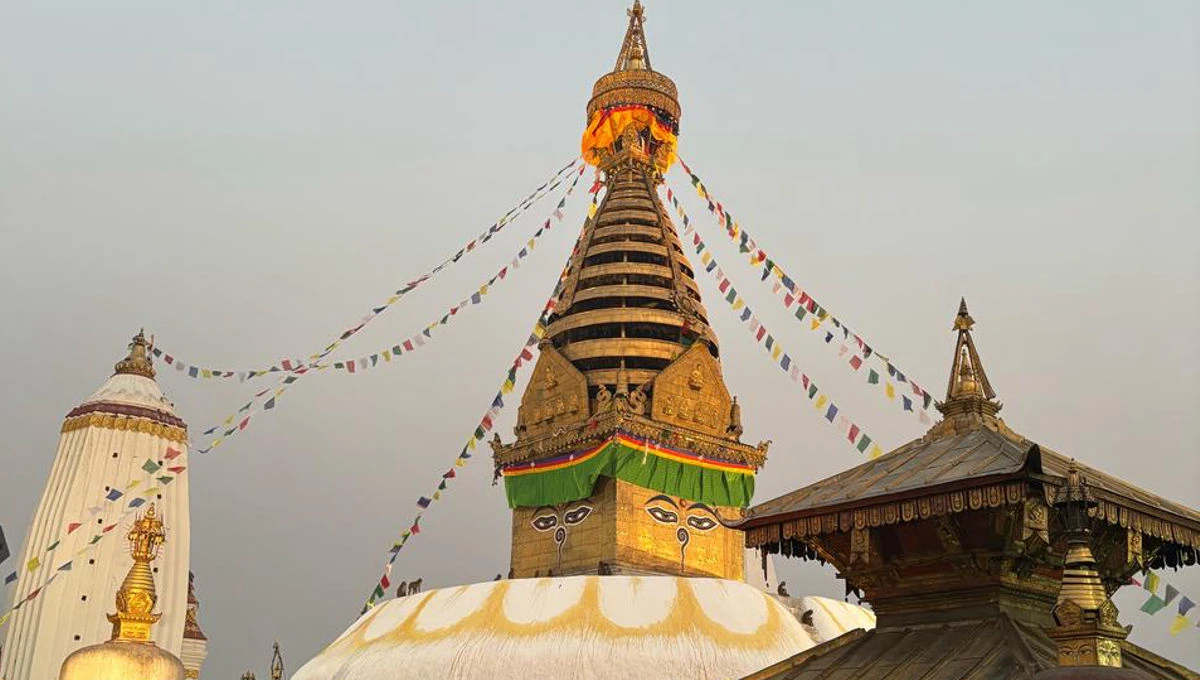
The Swyambhunath Stupa is another UNESCO World Heritage Site and a famous destination to see the impressive views of Kathmandu Valley from a higher elevation. The Stupa consists of a dome topped with a golden spire, surrounded by shrines, prayer wheels, and statues of Buddha. This place is known as the ‘Monkey Temple’ due to the large population of monkeys inhabiting tha area. The Stupa’s eyes, similar to the Boudhanath, symbolise wisdom. Visitors make a steady climb to reach the Stupa, where they can enjoy the stunning views of the valleys.
Bhaktapur Durbar Square
Bhaktapur Durbar Square, located in Bhaktapur, is one of the ancient cities in the Kathmandu Valley and a UNESCO World Heritage Site, which provides you a glimpse into the Medieval Nepalese architecture and culture. This place is famous for its well-preserved palaces and temples, which are constructed in the Pagoda style. Key attractions in Bhaktapur consist of the Vatsalla Temple, the 55-Window Palace, and the Golden Gate. The Bhaktapur Durbar structures are known for their elaborate woodwork and sculpture, making the area a true architectural gem.
Patan Durbar Square
Patan Durbar Square is situated in Patan (Lalitpur), another UNESCO World Heritage Site, a location that showcases the rich history and architecture of the Malla kings, the oldest and most picturesque squares in the Kathmandu Valley. The Durbar Square is filled with beautiful temples, shrines, and monuments, including the Hiranya Varna Mahavihar (Golden Temple) and the Mahaboudha Temple. Visitors can explore the art galleries and museums, where they admire the temple architecture, and take a short walk around the Durbar. Patan is famous for its rich Newar culture, with numerous traditional festivals and events throughout the year.